


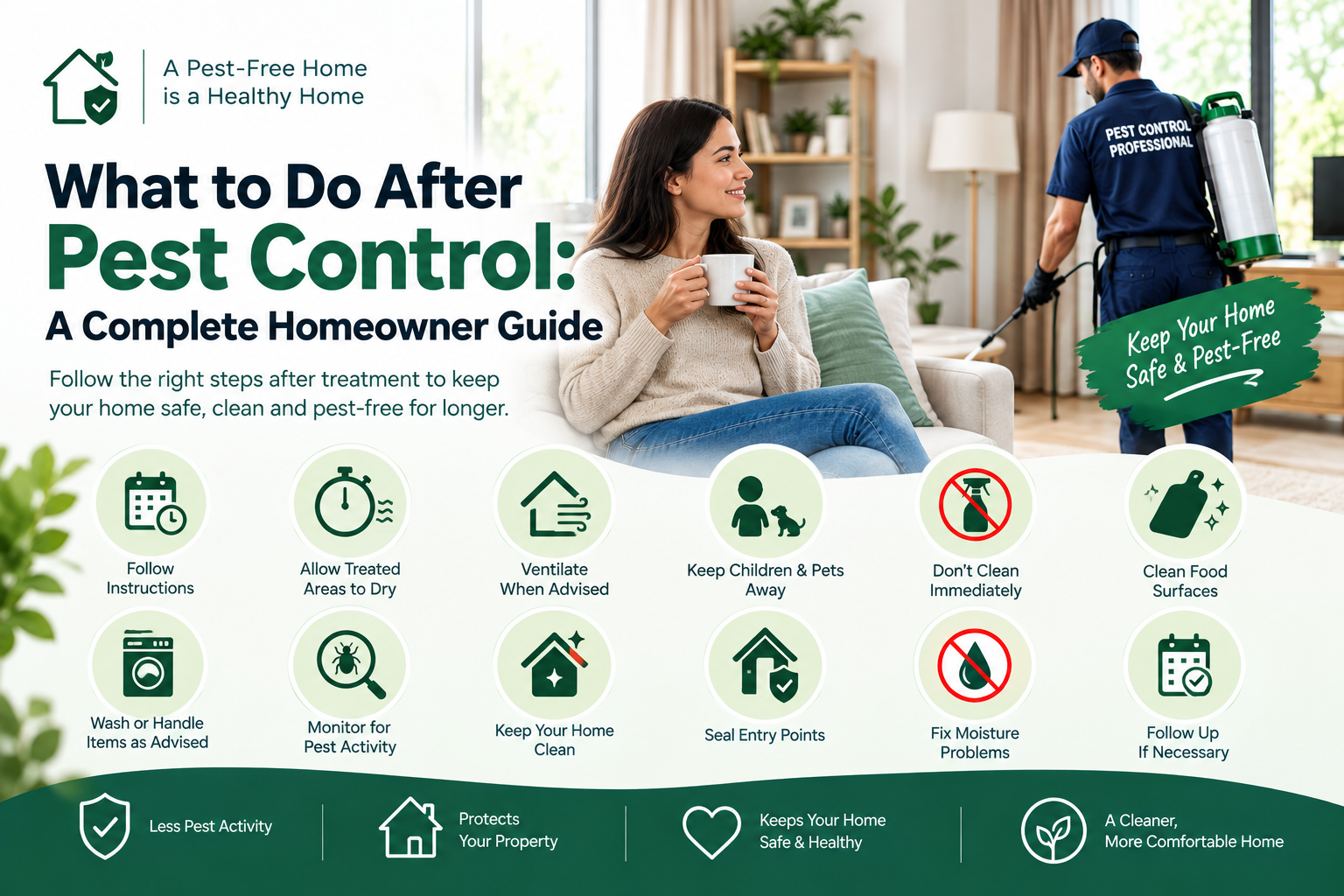

What to Do After Pest Control: A Complete Homeowner Guide
Getting professional pest control treatment is an important step toward protecting your home from unwanted insects and pests. But the work doesn’t necessarily end when the technician leaves.
What you do after pest control treatment can affect the effectiveness of the service and help prevent pests from returning.
From waiting before re-entering treated areas to cleaning surfaces and monitoring pest activity, here is a complete guide to what homeowners should do after pest control.
1. Follow the Technician’s Instructions
The most important step after pest control is to follow the instructions provided by your pest-control professional.
Different treatments use different products and application methods, so there is no single waiting period or aftercare routine that applies to every treatment.
Ask the technician about:
- When you can safely re-enter treated areas
- When children and pets can return
- Which surfaces should be cleaned
- How long to wait before cleaning
- Whether ventilation is required
- Whether follow-up treatment is recommended
Always follow the product label and professional instructions.
2. Allow Treated Areas to Dry
If a liquid treatment was applied, don’t immediately touch, wash, or disturb the treated surfaces.
Allow the treatment to dry according to the technician’s instructions.
Avoid allowing children or pets to contact treated surfaces until you have been told that it is safe to do so.
3. Ventilate the Home When Recommended
Depending on the treatment, ventilation may be recommended.
Open windows and doors only when instructed or when it is appropriate for the treatment used.
Good ventilation can help improve indoor air circulation after certain pest-control applications.
4. Keep Children and Pets Away Until It Is Safe
Children and pets can be more likely to touch floors, walls, furniture, and other surfaces.
Keep them away from treated areas until the pest-control professional confirms that re-entry is appropriate.
Pay special attention to:
- Floors
- Carpets
- Baseboards
- Treated furniture
- Pet feeding areas
- Children’s play areas
5. Don’t Clean Treated Areas Immediately
One common mistake homeowners make is cleaning treated surfaces immediately after pest control.
Depending on the treatment, cleaning too soon may remove the product before it has had the intended effect.
Ask your technician which areas should remain undisturbed and when normal cleaning can resume.
6. Clean Food Preparation Surfaces
Kitchen counters, dining surfaces, cutting boards, and other food-contact areas may require cleaning before being used, depending on the treatment.
Follow the specific instructions given by your pest-control professional.
Food should also be stored properly and kept away from areas being treated.
7. Wash or Handle Items as Recommended
Some pest-control treatments may require certain washable items to be cleaned or laundered.
This can be particularly relevant for treatments involving bedrooms, furniture, clothing, or bedding.
Don’t automatically wash everything after treatment. Instead, ask the technician which items require cleaning and which should remain in place.
8. Don’t Be Alarmed if You See Some Pests
After treatment, you may still see some pests for a period of time.
Depending on the pest and treatment, insects may become more visible as they leave their hiding places or come into contact with treated areas.
However, if pest activity continues or increases significantly, contact the pest-control company and ask whether a follow-up inspection is needed.
9. Monitor the Area
Keep an eye on areas where you previously noticed pest activity.
Look for:
- Live insects
- Droppings
- New nests
- Eggs
- Gnaw marks
- Damaged wood
- New pest activity
Monitoring can help determine whether the treatment is working and whether additional action may be necessary.
10. Keep Your Home Clean
Professional pest control works best when combined with good household practices.
After treatment:
- Clean food spills quickly
- Keep garbage covered
- Store food in sealed containers
- Keep kitchens dry
- Remove standing water
- Clean crumbs from floors and counters
- Keep storage areas organized
These habits can reduce conditions that attract pests.
11. Seal Possible Entry Points
Pest control can reduce existing pest activity, but preventing new pests from entering your home is also important.
Check for gaps around:
- Doors
- Windows
- Pipes
- Vents
- Drains
- Walls
- Utility openings
Seal suitable cracks and gaps where possible.
12. Fix Moisture Problems
Water and moisture can attract certain pests.
After treatment, check for:
- Leaking faucets
- Broken pipes
- Damp cabinets
- Standing water
- Poor ventilation
- Water accumulation near the property
Fixing these issues can help reduce future pest activity.
13. Follow Up if Necessary
Some pest problems cannot always be resolved with a single visit.
Certain infestations may require:
- Follow-up inspections
- Additional treatments
- Monitoring
- Repairs
- Long-term prevention
This is especially important for persistent pest problems such as termites or bed bugs.
Ask your pest-control professional whether a follow-up visit is recommended.
What Not to Do After Pest Control
Don’t Immediately Wash Treated Areas
Cleaning too soon may interfere with the treatment. Follow the technician’s instructions.
Don’t Spray Additional Chemicals Without Advice
Using another pesticide immediately after professional treatment may be unnecessary or inappropriate.
Ask the professional before applying additional products.
Don’t Let Children or Pets Enter Too Soon
Wait until the recommended re-entry time has passed and the technician confirms the area is suitable for normal use.
Don’t Ignore Continuing Pest Activity
Seeing occasional pests after treatment can happen, but persistent or increasing activity should be reported to the pest-control provider.
How Long Does Pest Control Take to Work?
The time required for pest activity to decrease depends on several factors, including:
- Type of pest
- Level of infestation
- Treatment method
- Property conditions
- Pest life cycle
- Follow-up requirements
Some treatments can produce noticeable results quickly, while others may take longer.
Instead of expecting all pests to disappear immediately, follow the treatment plan and monitor the affected areas.
Final Thoughts
Professional pest control is only one part of maintaining a pest-free home. Proper aftercare, cleanliness, moisture control, sealing entry points, and regular monitoring can all contribute to long-term pest prevention.
Most importantly, follow the specific instructions provided by your pest-control professional and the product label. If you continue to notice significant pest activity after treatment, contact the service provider for guidance or a follow-up inspection.
A little care after treatment can help you maintain a cleaner, more comfortable, and better-protected home.