


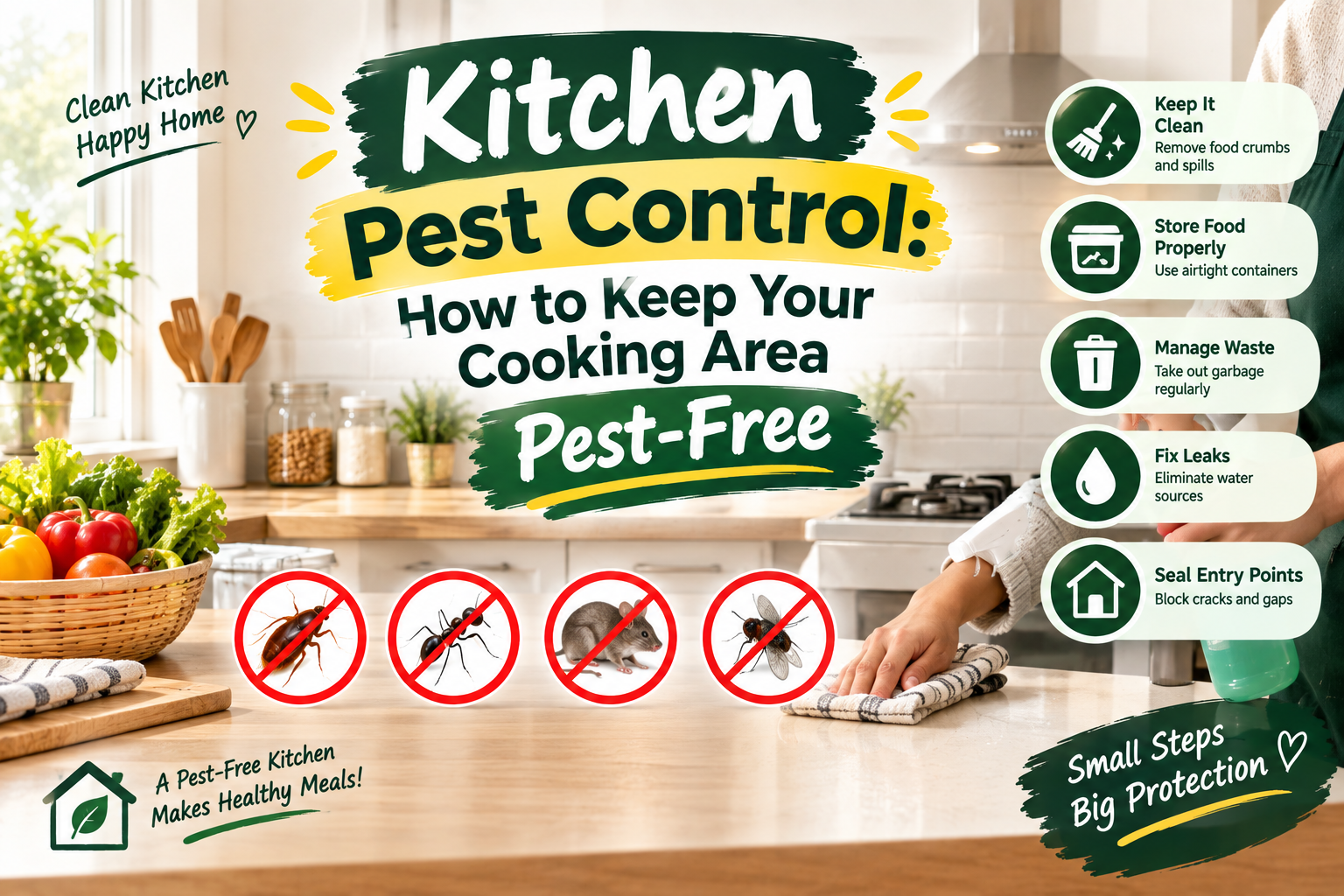

Kitchen Pest Control: How to Keep Your Cooking Area Pest-Free
The kitchen is one of the most common areas where household pests appear. Food, moisture, garbage, and warm hiding places can make kitchens attractive to cockroaches, ants, flies, rodents, and other pests.
Keeping your cooking area clean and reducing access to food and water can help prevent infestations. If pests continue to appear despite regular cleaning, professional pest control may be necessary.
Why Do Pests Enter the Kitchen?
Kitchens provide several things pests need to survive:
- Food crumbs and spills
- Open food containers
- Garbage and food waste
- Water and moisture
- Warm, dark hiding places
- Cracks and gaps
- Food stored in accessible packaging
Even a small food source can attract pests if it remains available.
Common Kitchen Pests
Cockroaches
Cockroaches often hide behind appliances, inside cabinets, under sinks, and around plumbing areas. They are attracted to food residue, moisture, and warm hiding places.
Ants
Ants may enter kitchens in search of sugary foods, crumbs, and water. Once they locate a food source, they can create trails between the food and their nesting area.
Flies
Flies are commonly attracted to exposed food, garbage, food waste, and other organic material.
Rodents
Mice and rats may enter kitchens looking for food, water, and shelter. They can also chew through packaging and leave droppings around food storage areas.
1. Keep Kitchen Counters Clean
Wipe counters, tables, stovetops, and other food preparation surfaces regularly.
Pay attention to areas underneath appliances where crumbs and food residue can accumulate.
2. Store Food in Sealed Containers
Keep cereals, flour, sugar, snacks, grains, and other food products in airtight or well-sealed containers.
Do not leave open food packets on countertops overnight.
3. Clean Spills Immediately
Oil, sauces, juice, sugary drinks, and food residue can attract pests.
Clean spills as soon as possible and check around cooking areas for hidden food residue.
4. Take Out Garbage Regularly
Food waste can quickly become a food source for pests.
Use a covered garbage bin and dispose of kitchen waste regularly. Clean the bin when food residue accumulates.
5. Keep the Sink and Drains Clean
Moisture can attract pests, especially cockroaches and other insects.
Clean your sink regularly, avoid leaving standing water, and repair leaking taps or pipes.
Keep suitable drain covers in place when appropriate.
6. Clean Behind Appliances
Pests often hide behind refrigerators, ovens, microwaves, and other kitchen appliances.
Periodically clean accessible areas behind and underneath appliances to remove crumbs, grease, and debris.
7. Inspect Kitchen Cabinets
Check cabinets and drawers for food crumbs, spills, insects, droppings, and damaged food packaging.
Remove expired food and wipe shelves regularly.
8. Seal Cracks and Gaps
Small openings around pipes, walls, doors, windows, and cabinets can provide entry points for pests.
Inspect the kitchen carefully and seal suitable gaps with appropriate materials.
9. Keep Pet Food Under Control
If you have pets, avoid leaving leftover food exposed for long periods.
Clean food bowls and the surrounding area regularly to reduce accessible food sources.
10. Reduce Clutter
Cardboard boxes, newspapers, unused containers, and other clutter can provide hiding places for pests.
Keep kitchen storage areas organized and remove unnecessary materials.
How to Prevent Cockroaches in the Kitchen
Cockroaches are particularly common in kitchens because they have easy access to food and moisture.
To reduce cockroach activity:
- Keep food sealed.
- Clean crumbs quickly.
- Fix plumbing leaks.
- Keep sinks dry.
- Empty garbage regularly.
- Clean behind appliances.
- Seal cracks and gaps.
- Avoid leaving dirty dishes overnight.
If cockroaches continue to appear, professional pest control can help identify hidden activity and potential entry points.
How to Deal With Kitchen Ants
If you see ants, clean the area thoroughly and remove the food source.
Try to identify where they are entering and seal suitable cracks or gaps. Keep sugary foods sealed and clean spills immediately.
If ant trails continue to return, there may be a nest or persistent entry point that requires further investigation.
When Should You Call a Pest Control Professional?
Professional pest control may be appropriate if:
- You regularly see cockroaches.
- Ants keep returning.
- Flies are present in large numbers.
- You find rodent droppings.
- Food packaging has been damaged.
- You discover nests or egg cases.
- DIY prevention has not solved the problem.
- Pests are appearing in multiple areas.
A professional can identify the pest, inspect potential hiding areas, and recommend an appropriate treatment plan.
What About Pest Control Around Food?
Before any professional treatment, follow the technician’s preparation instructions. Depending on the treatment, you may need to remove or cover exposed food, dishes, utensils, and other kitchen items.
Never apply pesticides directly to food, cooking utensils, or food-contact surfaces unless the product is specifically labeled for that use.
Always follow the product label and professional instructions.
Final Thoughts
A clean kitchen is an important part of pest prevention. Store food properly, clean spills quickly, manage garbage, control moisture, and seal potential entry points.
If pests continue to appear despite good cleaning and prevention practices, professional pest control can help identify the underlying problem.
Keep your kitchen clean, dry, organized, and protected to create an environment that is less attractive to unwanted pests.