


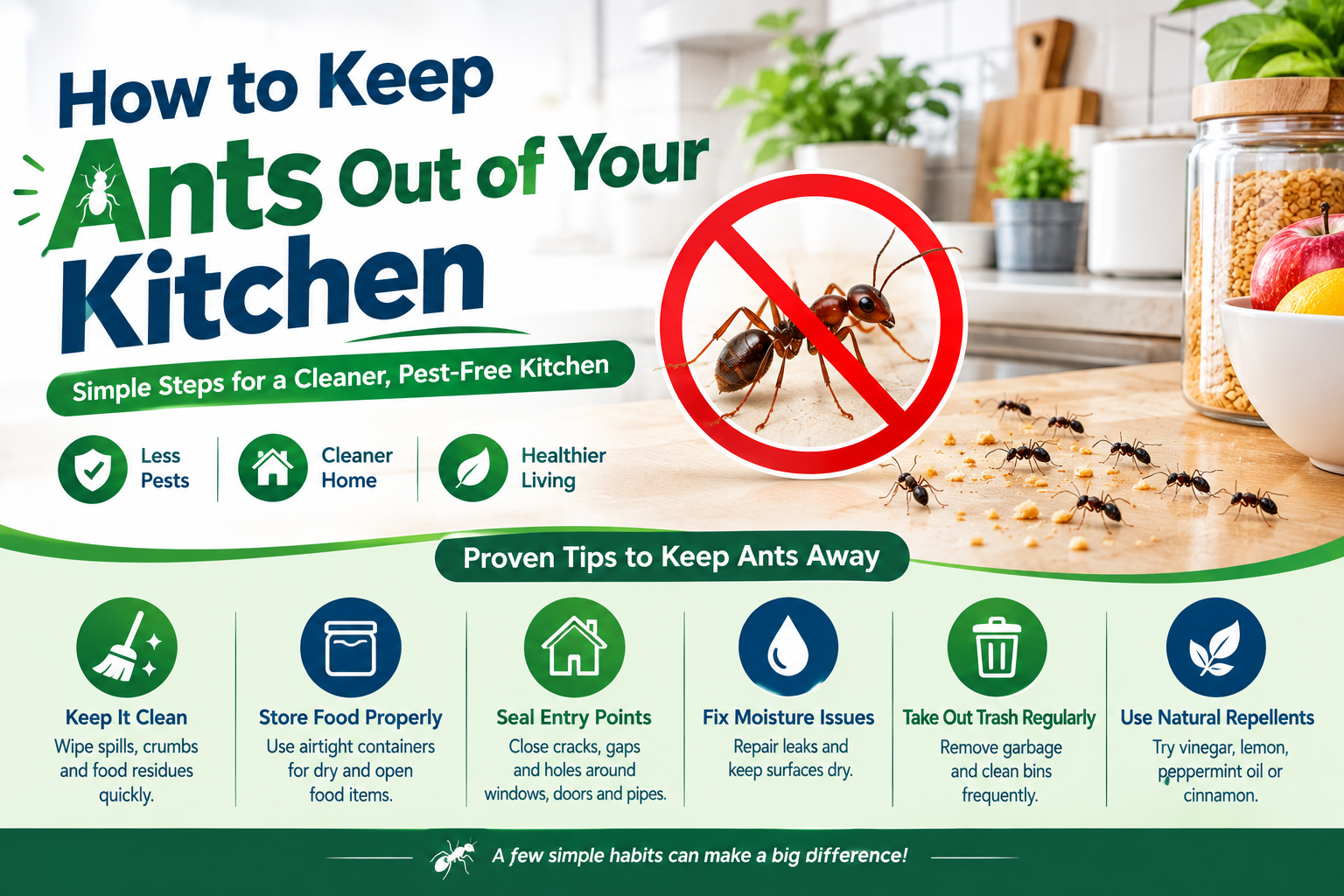

How to Keep Ants Out of Your Kitchen
Finding ants crawling across your kitchen counter can be frustrating. Kitchens provide ants with exactly what they are looking for—food, water, and shelter. Even small crumbs or drops of sugary liquids can attract ants and encourage them to return.
The good news is that simple cleaning and prevention habits can help keep ants out of your kitchen.
Why Do Ants Enter Kitchens?
Ants commonly enter kitchens in search of food and moisture. They may be attracted by:
- Sugar, sweets, and sugary drinks
- Food crumbs
- Grease and food residue
- Open food packets
- Pet food
- Garbage
- Leaking taps or pipes
- Moist areas around sinks
Once worker ants find a food source, they can leave a scent trail that helps other ants locate the same source.
1. Clean Food Crumbs Quickly
Even tiny food particles can attract ants. Wipe kitchen counters and tables after preparing or eating food.
Pay particular attention to areas under appliances, dining tables, cabinets, and kitchen corners.
2. Store Food in Airtight Containers
Keep sugar, biscuits, cereals, flour, snacks, and other foods in sealed containers.
Avoid leaving opened food packets on countertops or inside cabinets without proper sealing.
3. Clean Spills Immediately
Sweet drinks, juices, syrups, and sauces can attract ants quickly.
If something spills, clean the area thoroughly rather than simply wiping away the visible liquid.
4. Keep Your Kitchen Sink Dry
Moisture can attract ants and other household pests. Fix leaking taps and pipes and avoid leaving standing water around the sink.
After washing dishes, keep the sink area as dry as practical.
5. Empty the Garbage Regularly
Food waste can provide an easy food source for ants.
Use a covered garbage bin and remove kitchen waste regularly. Clean the bin if food residue accumulates inside.
6. Clean Pet Food Areas
If you have pets, don’t leave food bowls with leftover food sitting out for long periods.
Clean the surrounding floor and bowls regularly to reduce potential food sources for ants.
7. Find and Seal Entry Points
Inspect your kitchen for small gaps around:
- Windows
- Doors
- Pipes
- Cabinets
- Walls
- Floor edges
- Utility openings
Sealing suitable cracks and gaps can reduce the ways ants enter your kitchen.
8. Clean Ant Trails
If you notice ants following a specific path, clean the area thoroughly to remove food residue and scent trails.
Also investigate where the ants are entering from rather than focusing only on the visible ants.
9. Keep Kitchen Cabinets Clean
Food particles can accumulate inside cabinets and drawers.
Remove expired food, wipe shelves regularly, and keep food packages properly sealed.
10. Avoid Excess Moisture
Check under your kitchen sink and around plumbing fixtures for leaks or dampness.
Addressing moisture problems can make the kitchen less attractive to ants and other pests.
What If Ants Keep Coming Back?
If ants continue appearing despite regular cleaning and prevention, there may be a nest or persistent entry point nearby.
Repeatedly killing visible ants may provide only temporary relief if the underlying source remains.
A professional pest control inspection can help identify potential nesting areas and determine an appropriate treatment approach.
When Should You Consider Professional Ant Control?
Professional pest control may be worth considering when:
- Ants appear every day.
- You see large numbers of ants.
- Ant trails keep returning.
- Ants are appearing in multiple rooms.
- You cannot find their entry point.
- DIY prevention methods have not solved the problem.
Final Thoughts
Keeping ants out of your kitchen starts with eliminating their access to food, water, and entry points. Clean spills quickly, store food properly, manage garbage, fix leaks, and seal cracks where possible.
If the problem continues, professional pest control can help identify the source and provide a suitable solution.
A clean, dry, and well-sealed kitchen is one of the best ways to reduce unwanted ant activity.