


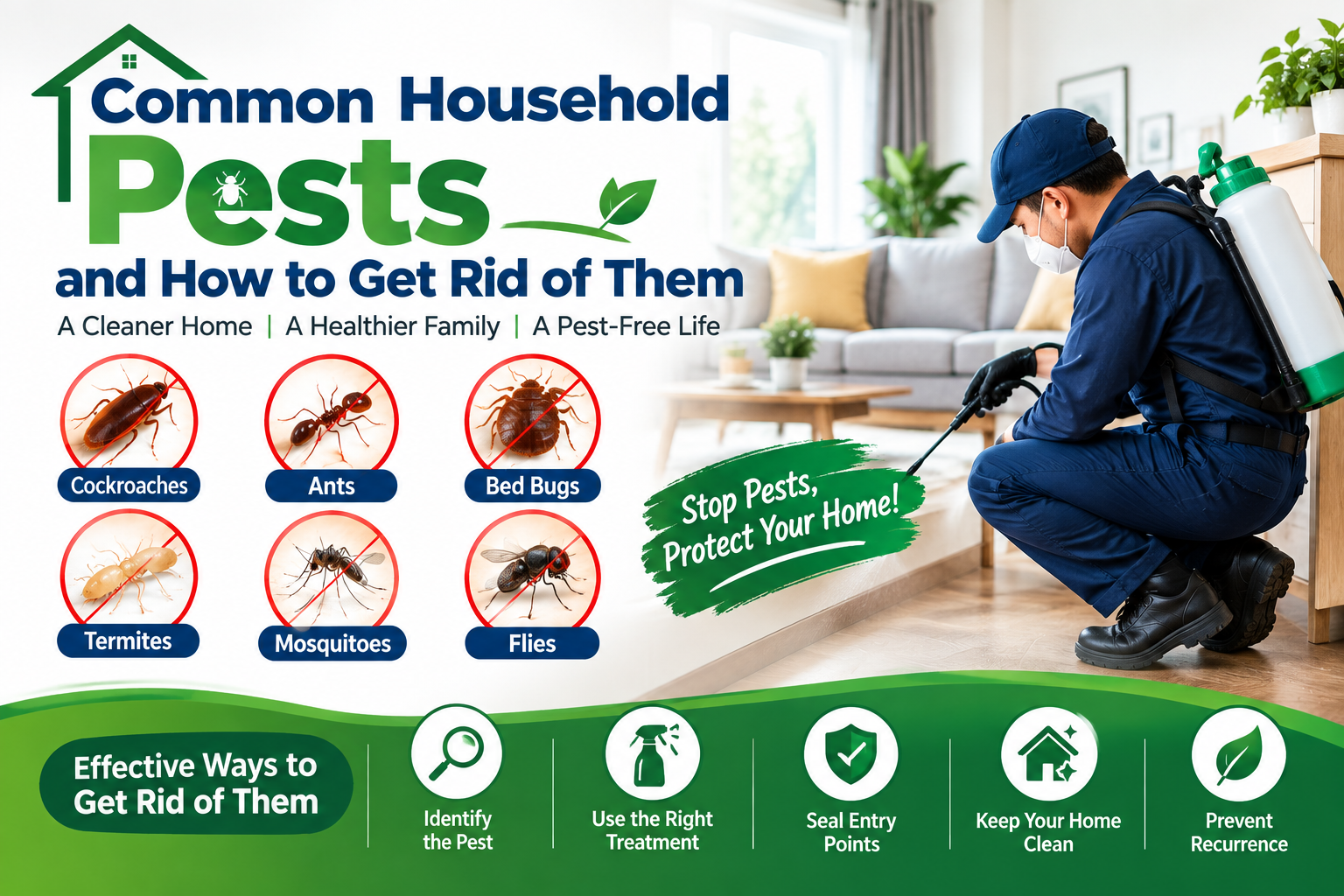

Common Household Pests and How to Get Rid of Them
Household pests can appear in any home, regardless of how clean or well-maintained it is. Ants in the kitchen, cockroaches in the bathroom, mosquitoes around stagnant water, or termites damaging wooden furniture can quickly become frustrating problems.
Understanding common household pests and knowing how to prevent them can help protect your home and family.
1. Cockroaches
Cockroaches are among the most common household pests. They are attracted to food crumbs, moisture, garbage, and warm hiding places.
Signs of Cockroaches
- Live or dead cockroaches
- Small dark droppings
- Egg cases
- Unpleasant odor
- Cockroaches appearing at night
How to Get Rid of Cockroaches
Keep food stored in sealed containers, clean kitchen surfaces regularly, fix water leaks, and keep garbage covered. Seal cracks and gaps around cabinets, pipes, and walls.
For a serious infestation, professional cockroach pest control can help identify and treat hiding areas.
2. Ants
Ants often enter homes looking for food and water. Kitchens, dining areas, and places where food is stored are common locations.
How to Prevent Ants
- Clean food spills immediately.
- Store sugary foods in airtight containers.
- Keep kitchen counters clean.
- Empty garbage regularly.
- Seal cracks and entry points.
- Avoid leaving pet food exposed for long periods.
If ants keep returning, there may be a nest or entry point that needs professional attention.
3. Mosquitoes
Mosquitoes can become a major nuisance, particularly during warm and humid weather. They commonly breed in stagnant water.
How to Reduce Mosquitoes
Remove standing water from buckets, plant trays, containers, drains, and other areas around the property. Keep water storage containers covered and maintain screens on doors and windows.
Professional mosquito control can be useful when mosquito activity remains high despite basic prevention.
4. Termites
Termites can cause serious damage to wooden structures, furniture, doors, and other materials containing cellulose.
Signs of Termites
- Hollow or damaged wood
- Mud tubes
- Small holes in wooden surfaces
- Discarded wings
- Doors or windows becoming difficult to close
How to Control Termites
Termite control should be handled as early as possible. A professional inspection can help determine the extent of the infestation and identify areas requiring treatment.
5. Bed Bugs
Bed bugs are small insects that hide in mattresses, bed frames, furniture, and cracks. They can be difficult to eliminate because they can hide in very small spaces.
Common Signs
- Small insects around mattresses or furniture
- Tiny dark spots on bedding
- Shed skins
- Bites or skin irritation after sleeping
How to Get Rid of Bed Bugs
Wash bedding according to appropriate care instructions, vacuum mattresses and surrounding areas, reduce clutter, and inspect nearby furniture.
Because bed bugs can hide in multiple locations and their eggs may survive some treatments, professional treatment and follow-up may be necessary.
6. Flies
Flies are commonly attracted to uncovered food, garbage, pet waste, and decaying organic material.
Prevention Tips
Keep food covered, clean garbage bins regularly, avoid leaving food waste exposed, and maintain clean kitchen and dining areas.
Installing suitable window screens can also help reduce flies entering your home.
7. Rodents
Mice and rats can enter homes through surprisingly small openings. They may contaminate food, damage property, and create unpleasant odors.
Signs of Rodents
- Droppings
- Gnaw marks
- Scratching sounds
- Damaged food packaging
- Nesting materials
- Unusual odors
Seal potential entry points, keep food in secure containers, and remove accessible food sources. Professional pest control may be needed for an established rodent problem.
8. Spiders
Most household spiders are harmless, but their webs can be unpleasant and some species may require professional identification.
Regularly remove webs, reduce clutter, and seal gaps around windows and doors.
General Tips to Keep Pests Away
You can reduce the chances of pest infestations by following a few simple habits:
- Keep your home clean and dry.
- Store food in sealed containers.
- Clean spills and crumbs quickly.
- Take garbage out regularly.
- Fix leaking pipes and taps.
- Remove stagnant water.
- Seal cracks and gaps.
- Keep storage areas organized.
- Inspect items brought into the home.
- Schedule professional pest inspections when necessary.
When Should You Call a Professional?
DIY pest control may be sufficient for minor pest activity, but recurring or large infestations can require professional treatment.
Consider contacting a pest control professional if:
- You repeatedly see pests.
- Pest activity is increasing.
- You find nests or egg cases.
- There is property damage.
- DIY methods have not solved the problem.
- You are unsure where the pests are coming from.
A professional can inspect the property, identify the pest, locate potential breeding or hiding areas, and recommend an appropriate treatment.
Conclusion
Cockroaches, ants, mosquitoes, termites, bed bugs, flies, rodents, and spiders are some of the most common pests found around homes. Keeping your property clean, dry, organized, and properly sealed can help prevent many infestations.
If pests continue to return, early professional intervention can help prevent the problem from becoming more difficult and expensive to manage.
A pest-free home starts with prevention, regular maintenance, and quick action when you notice the first signs of an infestation.