



Seasonal Pest Problems: Which Pests Appear During Each Season?
Pest problems can change throughout the year. Different weather conditions can affect pest activity, breeding, food availability, and where pests seek shelter.
While some pests can appear at any time of year, certain insects and rodents are more noticeable during particular seasons. Understanding seasonal pest activity can help homeowners take preventive steps before an infestation becomes a bigger problem.
Why Do Pest Problems Change With the Seasons?
Temperature, humidity, rainfall, food availability, and changes in outdoor conditions can all influence pest behavior.
When outdoor conditions become uncomfortable or food becomes scarce, some pests may move indoors looking for shelter, moisture, warmth, or food.
Let’s look at common seasonal pest problems.
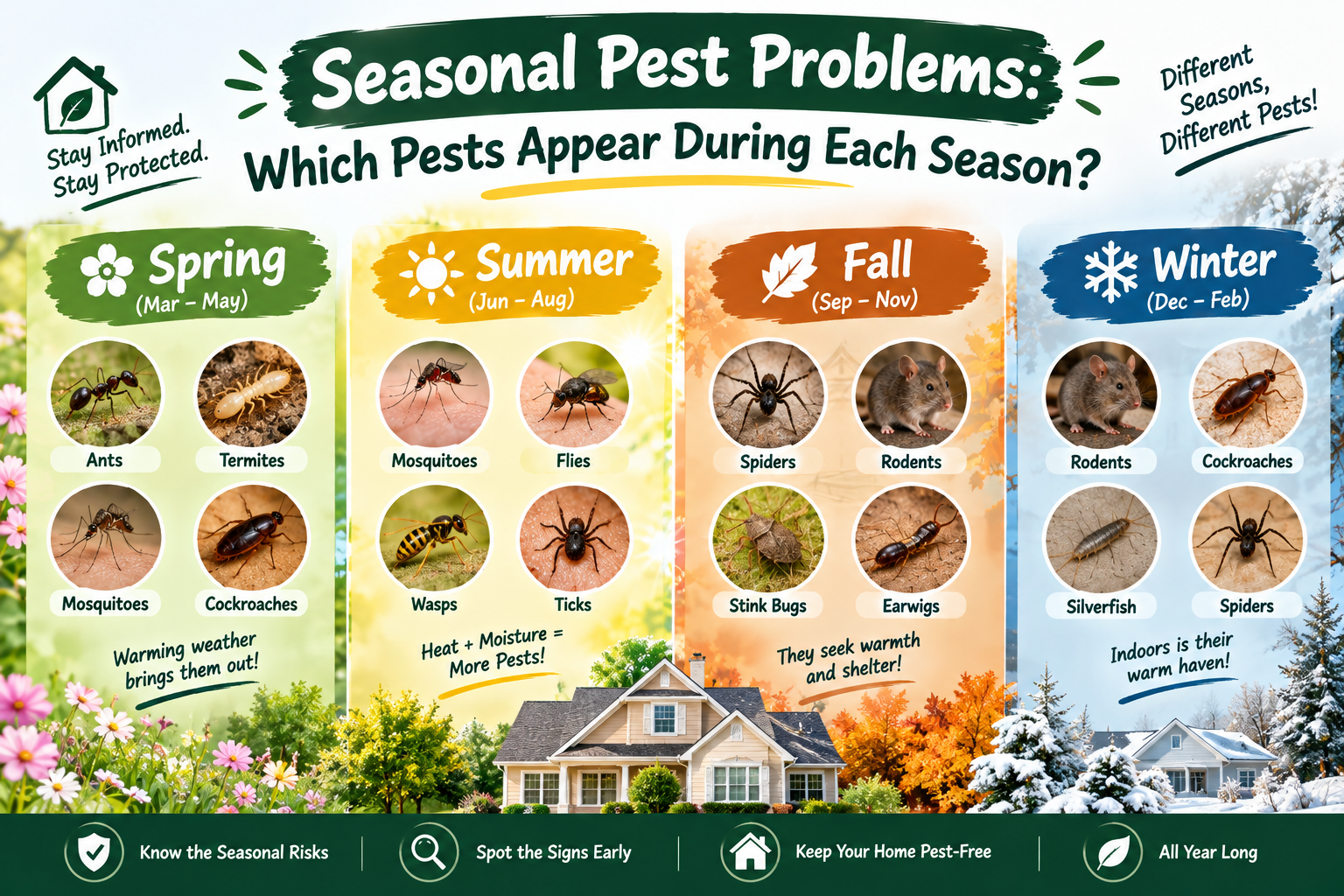
Spring Pest Problems
Spring brings warmer temperatures and increased outdoor activity. As plants grow and insects become more active, homeowners may begin noticing more pest activity.
Common Spring Pests
- Ants
- Termites
- Flies
- Mosquitoes
- Spiders
- Fleas and ticks
Ants
Ant activity often becomes more noticeable as temperatures rise. They may enter kitchens and other areas searching for food and water.
Keep food sealed, clean spills quickly, and seal potential entry points around windows, doors, and walls.
Termites
Spring can also bring increased termite activity, including the appearance of winged termites or discarded wings around properties.
Inspect wooden structures and contact a professional if you notice signs of termite activity.
Summer Pest Problems
Warm weather can create ideal conditions for many insects. Increased outdoor activity, humidity, and standing water can contribute to pest problems.
Common Summer Pests
- Mosquitoes
- Flies
- Ants
- Cockroaches
- Wasps
- Termites
Mosquitoes
Mosquitoes can become particularly noticeable during warm and humid periods. Standing water in containers, plant trays, gutters, and other areas can provide breeding sites.
Remove standing water whenever possible and keep water storage containers covered.
Cockroaches
Cockroach activity can increase when warm conditions provide suitable environments for them to find food and moisture.
Keep kitchens clean, repair leaks, and store food in sealed containers.
Flies
Flies are attracted to garbage, exposed food, and organic waste.
Keep garbage covered, clean food preparation areas, and avoid leaving food uncovered.
Monsoon or Rainy Season Pest Problems
In areas with heavy rainfall, rain can significantly change pest activity. Water accumulation and increased humidity can create favorable conditions for certain pests.
Common Rainy Season Pests
- Mosquitoes
- Cockroaches
- Ants
- Termites
- Flies
- Rodents
Cockroaches
Heavy rain can drive cockroaches toward sheltered areas, including buildings, drains, kitchens, and bathrooms.
Keep drains maintained, repair leaks, and seal suitable gaps around plumbing and walls.
Mosquitoes
Rainwater can collect in containers, gutters, plant pots, and other outdoor areas.
Check your property regularly and remove standing water where possible.
Rodents
Rain can also encourage rodents to seek dry shelter. Check for holes and gaps around doors, walls, roofs, and utility openings.
Autumn Pest Problems
As temperatures begin to change, some pests may search for protected areas where they can shelter.
Common Autumn Pests
- Rodents
- Cockroaches
- Spiders
- Ants
- Flies
Rodents
Mice and rats may look for food and sheltered spaces as outdoor conditions change.
Store food securely, reduce clutter, and seal potential entry points around the property.
Spiders
Spiders may become more noticeable as they search for food and suitable sheltered areas.
Regularly remove webs and reduce insect activity around the home.
Winter Pest Problems
Cold weather can cause some pests to seek warmth and shelter indoors.
Common Winter Pests
- Rodents
- Cockroaches
- Ants
- Spiders
- Stored-product pests
Rodents
Mice and rats may enter buildings through small gaps looking for warmth, food, and shelter.
Inspect the exterior of your home and seal suitable openings.
Cockroaches
Indoor areas with warmth, moisture, and food can continue to support cockroach activity even during colder weather.
Pay special attention to kitchens, bathrooms, drains, and areas around appliances.
How to Prevent Seasonal Pest Problems
You can reduce pest activity throughout the year by following a few simple habits.
1. Keep Food Properly Stored
Use sealed containers for food and avoid leaving uncovered food on kitchen counters.
2. Control Moisture
Fix leaking pipes and taps, improve drainage, and avoid allowing standing water to remain around your property.
3. Seal Entry Points
Inspect doors, windows, walls, pipes, vents, and foundations for cracks or gaps.
4. Keep Your Home Clean
Regularly clean food crumbs, spills, garbage, and other materials that can attract pests.
5. Reduce Clutter
Cardboard boxes, unused furniture, papers, and other clutter can provide hiding places for insects and rodents.
6. Maintain Outdoor Areas
Keep gutters clean, trim vegetation where appropriate, remove standing water, and avoid storing unnecessary materials against exterior walls.
When Should You Consider Professional Pest Control?
Professional pest control may be useful if you notice:
- Frequent pest activity
- Large numbers of insects
- Repeated infestations
- Pest nests or egg cases
- Rodent droppings
- Termite warning signs
- Property damage
- Pest activity that continues despite prevention efforts
A professional can inspect the property, identify the pest, and recommend an appropriate treatment and prevention plan.
Seasonal Pest Prevention Checklist
Spring
- Check for ants and termite activity.
- Inspect wooden structures.
- Clean gutters and drainage areas.
- Seal cracks and gaps.
Summer
- Remove standing water.
- Keep food covered.
- Control garbage and food waste.
- Watch for mosquitoes, flies, and cockroaches.
Rainy Season
- Check for water accumulation.
- Keep drains clear.
- Inspect for cockroaches and rodents.
- Fix leaks and damp areas.
Autumn
- Inspect entry points.
- Reduce outdoor clutter.
- Check for rodents and spiders.
- Store food securely.
Winter
- Seal gaps around doors and walls.
- Check warm areas for cockroaches.
- Inspect for rodent activity.
- Keep storage areas organized.
Conclusion
Pest activity can change throughout the year depending on temperature, rainfall, humidity, food availability, and shelter. Ants and termites may become more noticeable during warmer periods, mosquitoes can increase when standing water is available, and rodents may seek shelter indoors as conditions become less favorable outside.
The best approach is to combine seasonal prevention, regular home maintenance, cleanliness, moisture control, and early pest detection.
If pest activity becomes persistent or difficult to manage, professional pest control can help identify the source and determine the appropriate treatment.
By preparing for seasonal pest activity, you can reduce the chances of unwanted pests taking over your home.