


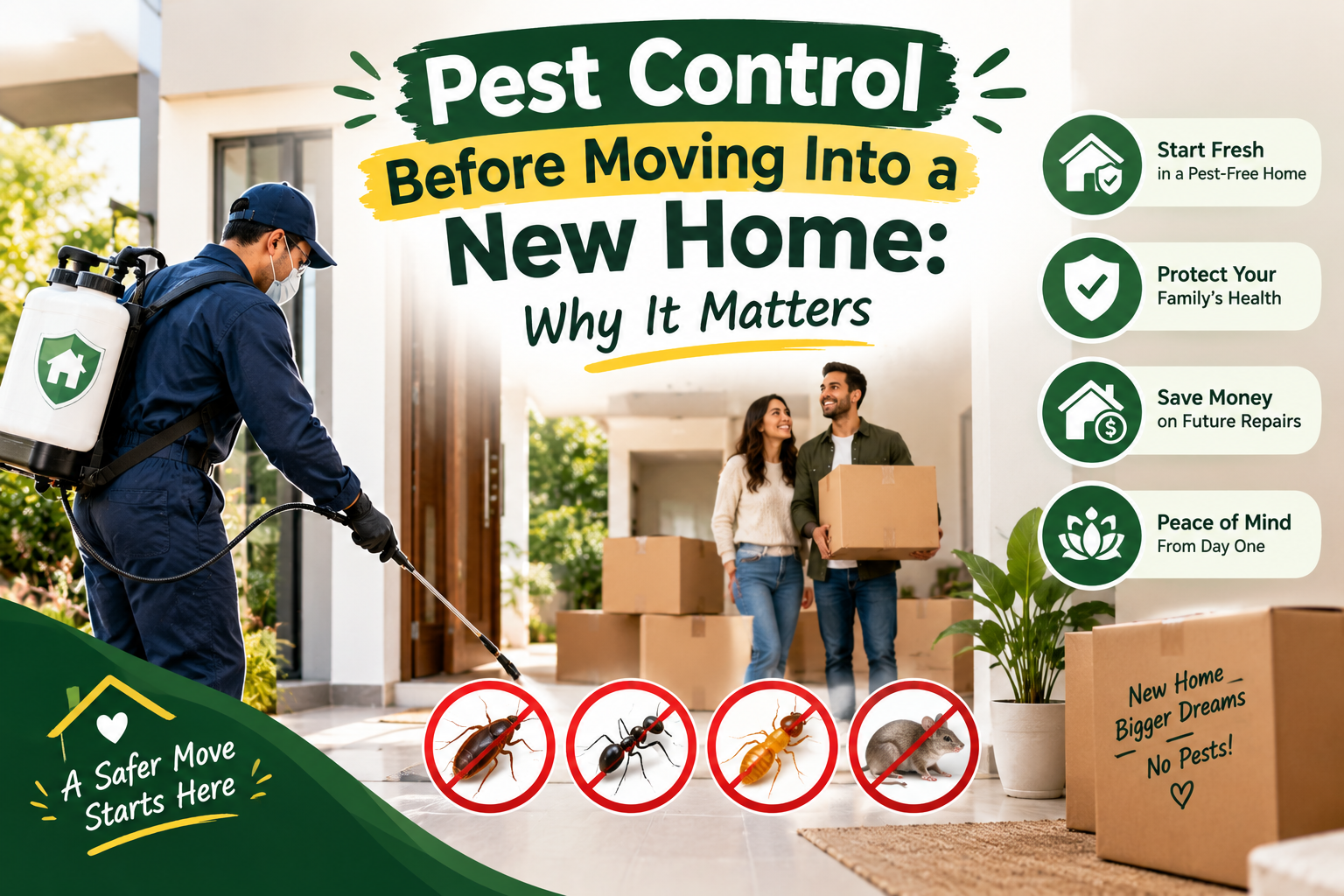

Pest Control Before Moving Into a New Home: Why It Matters
Moving into a new home is exciting, but before unpacking your boxes and arranging your furniture, it is worth checking whether the property has any existing pest problems.
Cockroaches, ants, termites, bed bugs, rodents, mosquitoes, and other pests can sometimes remain hidden inside a property. Treating potential pest issues before moving in can make the process easier and help you start life in your new home with a cleaner, more comfortable environment.
Why Should You Do Pest Control Before Moving In?
A vacant home is often easier to inspect and treat because there is less furniture, food, clothing, and personal belongings in the way.
Pre-move pest control can help you identify potential problems before they become more difficult to manage.
1. Empty Rooms Are Easier to Inspect
When a home is empty, pest control professionals can access areas that may later become difficult to reach.
These can include:
- Behind appliances
- Inside cabinets
- Along baseboards
- Around doors and windows
- Under sinks
- Around plumbing
- Storage areas
- Garages and utility spaces
2. Previous Pest Problems May Remain
A property may have had pest activity before you moved in.
Even if you do not see live pests during your initial inspection, signs such as droppings, nests, damaged wood, egg cases, or entry points may indicate previous or ongoing activity.
A professional inspection can help identify potential concerns.
3. Prevent Cockroaches and Ants
Kitchens and bathrooms provide food, water, and shelter for many household pests.
Before moving your belongings in, inspect cabinets, sinks, drains, and wall gaps. Clean the property thoroughly and address leaks or potential entry points.
Preventive pest control may be appropriate depending on the property’s condition and pest history.
4. Check for Termites
Termites can cause damage while remaining hidden inside wooden structures, walls, flooring, and other areas.
Before moving in, inspect:
- Wooden doors and frames
- Cabinets
- Flooring
- Furniture
- Walls and foundations
- Areas near moisture
Look for mud tubes, damaged or hollow-sounding wood, discarded wings, or other signs of termite activity.
If you suspect termites, arrange a professional inspection.
5. Reduce the Risk of Bed Bugs
Bed bugs can be introduced into a new home through furniture, mattresses, luggage, clothing, and other belongings.
Before bringing furniture into the property, inspect used mattresses, sofas, beds, and other second-hand items carefully.
If the property has a known history of bed bugs, professional inspection may be particularly useful.
6. Check for Rodents
Empty properties can sometimes reveal signs of rodents that may otherwise go unnoticed.
Look for:
- Droppings
- Gnaw marks
- Nesting materials
- Holes or gaps
- Unusual odors
- Damaged food packaging
Seal suitable entry points and remove accessible food sources.
7. Address Moisture Problems
Moisture can attract many types of pests.
Before moving in, check for:
- Leaking taps
- Leaking pipes
- Damp walls
- Poor drainage
- Standing water
- Roof leaks
- Moisture under sinks
Fixing these issues can help reduce conditions that attract pests.
8. Seal Pest Entry Points
Inspect the property for small gaps and openings around:
- Doors
- Windows
- Pipes
- Drains
- Walls
- Utility lines
- Vents
Seal appropriate openings to reduce potential pest entry points.
9. A Pest-Free Home Makes Moving Easier
Moving is already a major task. Discovering cockroaches, ants, rodents, or bed bugs after unpacking can make the process much more stressful.
Addressing pest concerns before moving furniture and belongings inside can make treatment and cleaning easier.
Should You Do Pest Control Before or After Moving In?
In many situations, addressing pest concerns before moving in can be more convenient because rooms are empty and treatment areas are easier to access.
However, the appropriate timing depends on the pest, treatment method, property condition, and instructions provided by the pest control professional.
Always follow the recommended preparation and re-entry instructions for the specific treatment.
What Should You Check Before Moving In?
Use this simple checklist:
- Inspect kitchens and bathrooms.
- Check cabinets and storage areas.
- Look for termite warning signs.
- Inspect wooden structures.
- Check for rodent droppings.
- Look for cockroach activity.
- Inspect potential bed bug hiding areas.
- Check for leaks and moisture.
- Seal suitable cracks and gaps.
- Clean the property thoroughly.
- Consider a professional pest inspection if needed.
When Should You Hire a Professional?
Professional pest control may be appropriate if:
- You find live pests.
- You discover nests or egg cases.
- There are signs of termites.
- You find rodent droppings.
- The property has a history of infestation.
- You notice bed bug signs.
- Pest activity continues after cleaning.
- You are unsure what type of pest you have found.
A professional can inspect the property, identify the pest, and recommend an appropriate treatment or prevention plan.
Conclusion
Pest control is an important consideration when preparing a new home. Checking for pests before moving in can make inspection and treatment easier because the property is usually less cluttered and more accessible.
Inspect the home carefully, fix moisture problems, seal suitable entry points, and consider professional pest control when signs of an infestation are present.
Before you unpack your boxes, make sure your new home is ready—not just for your furniture, but also free from unwanted pests.