


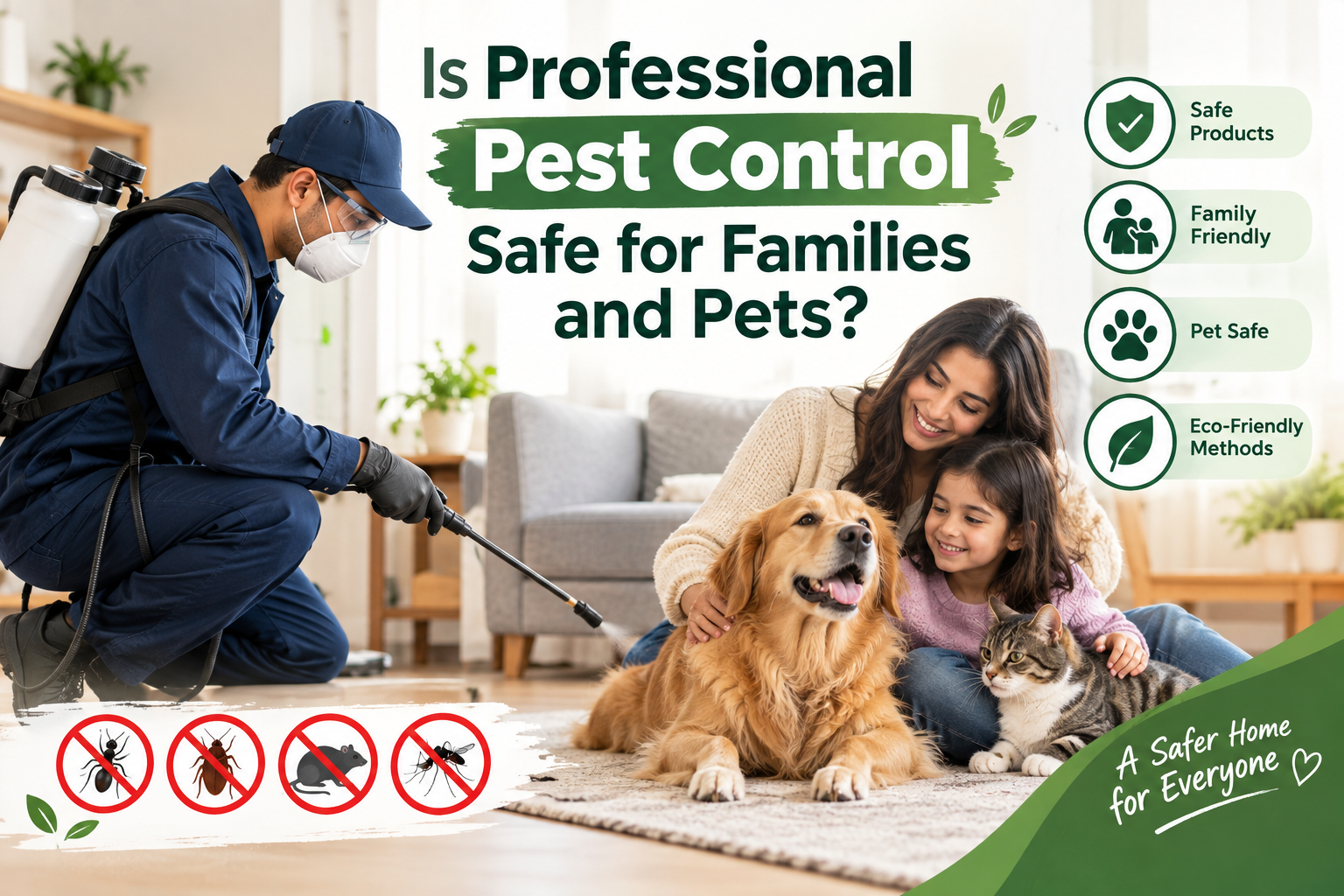

Is Professional Pest Control Safe for Families and Pets?
When homeowners discover ants, cockroaches, termites, bed bugs, or other pests, professional pest control can be an effective way to address the problem. However, one of the most common concerns is whether pest control treatment is safe for children, adults, and pets.
The answer depends on the pest control product, treatment method, application area, and how the treatment is carried out. When pesticides are used according to their label directions and appropriate safety precautions, unnecessary exposure can be reduced.
Is Professional Pest Control Safe?
Professional pest control is designed to control pests while minimizing unnecessary exposure to people and animals.
Before treatment, a pest control professional should assess the infestation and determine which treatment method is appropriate. Depending on the pest and property, treatment may involve targeted applications, baits, traps, physical methods, or other pest management techniques.
It is important to follow all instructions provided by the pest control professional and the pesticide product label.
What Makes Pest Control Safer?
Several factors can help reduce risks during pest control treatment.
1. Correct Product Selection
Different pests require different treatments. A professional can select a product or method appropriate for the specific pest and treatment area.
Using a product only for its labeled purpose is important.
2. Targeted Application
Professional treatments are often focused on areas where pests are active or hiding rather than applying unnecessary amounts throughout the home.
Targeted treatment can help reduce exposure to untreated areas.
3. Following Label Instructions
Pesticide labels provide important information about application, precautions, ventilation, re-entry, storage, and other safety requirements.
Always follow the label instructions for the specific product being used.
Is Pest Control Safe for Children?
Children can be more vulnerable to pesticide exposure because of their behavior and proximity to floors and treated surfaces.
For this reason, children should generally be kept away from treatment areas according to the pest control professional’s instructions.
Before treatment:
- Remove children’s toys from treatment areas.
- Store food and eating utensils safely.
- Follow any required evacuation instructions.
- Do not allow children into treated areas until the recommended re-entry time has passed.
Ask the pest control provider what precautions are required for your particular treatment.
Is Pest Control Safe for Dogs and Cats?
Pets should also be kept away from areas being treated.
Before treatment, you may need to:
- Remove pets from the treatment area.
- Cover or remove pet food and water bowls.
- Store pet toys and bedding safely.
- Follow the recommended re-entry period.
- Prevent pets from contacting treated surfaces until they are considered safe according to the product instructions.
Fish, birds, reptiles, and other animals may have specific sensitivities, so tell the pest control professional about all pets in your home before treatment.
What About Pregnancy?
If someone who is pregnant lives in the home, inform the pest control provider before treatment.
The professional can explain the product being used, the areas being treated, and any recommended precautions or temporary absence from the property.
For specific medical concerns, consult a qualified healthcare professional.
What Should You Do Before Pest Control Treatment?
Your pest control provider may give you preparation instructions based on the treatment.
These may include:
- Remove or cover exposed food.
- Store cooking utensils and dishes.
- Remove children’s toys from treatment areas.
- Move pet food and water bowls.
- Keep pets and children away from treatment areas.
- Provide access to areas that need inspection or treatment.
- Follow any specific preparation instructions from the technician.
What Should You Do After Treatment?
After treatment, follow the instructions provided by the pest control professional and product label.
Depending on the treatment, you may be advised to:
- Wait for a specific re-entry period.
- Allow treated areas to dry.
- Ventilate the property when instructed.
- Avoid washing treated surfaces immediately.
- Keep children and pets away from treated areas until permitted.
Do not assume that a treated surface is safe simply because it looks dry. Follow the specific instructions provided for the treatment.
Can Pest Control Be Done Without Spraying?
Yes. Pest management does not always mean spraying chemicals throughout the property.
Depending on the pest, professionals may use methods such as:
- Baits
- Traps
- Physical removal
- Sealing entry points
- Monitoring
- Targeted treatments
- Integrated pest management techniques
The most appropriate method depends on the type and severity of the infestation.
How to Choose a Responsible Pest Control Service
Before hiring a pest control company, ask:
- What pest are you treating?
- What treatment method will be used?
- Which areas will be treated?
- How long should people and pets stay away?
- What preparation is required?
- What precautions are needed after treatment?
- Will follow-up treatment be necessary?
A professional should be able to explain the treatment and safety precautions clearly.
Final Thoughts
Professional pest control can be used in homes with families and pets, but safety depends on the specific pesticide, application method, treatment area, and precautions followed.
The safest approach is to use pest control products only according to their labels, follow professional instructions, and keep children and pets away from treatment areas for the required period.
If you have concerns about a particular product, pet, child, pregnancy, or medical condition, discuss them with the pest control professional and an appropriate healthcare or veterinary professional.
Effective pest control should focus not only on eliminating pests but also on using appropriate treatment methods and minimizing unnecessary exposure.