



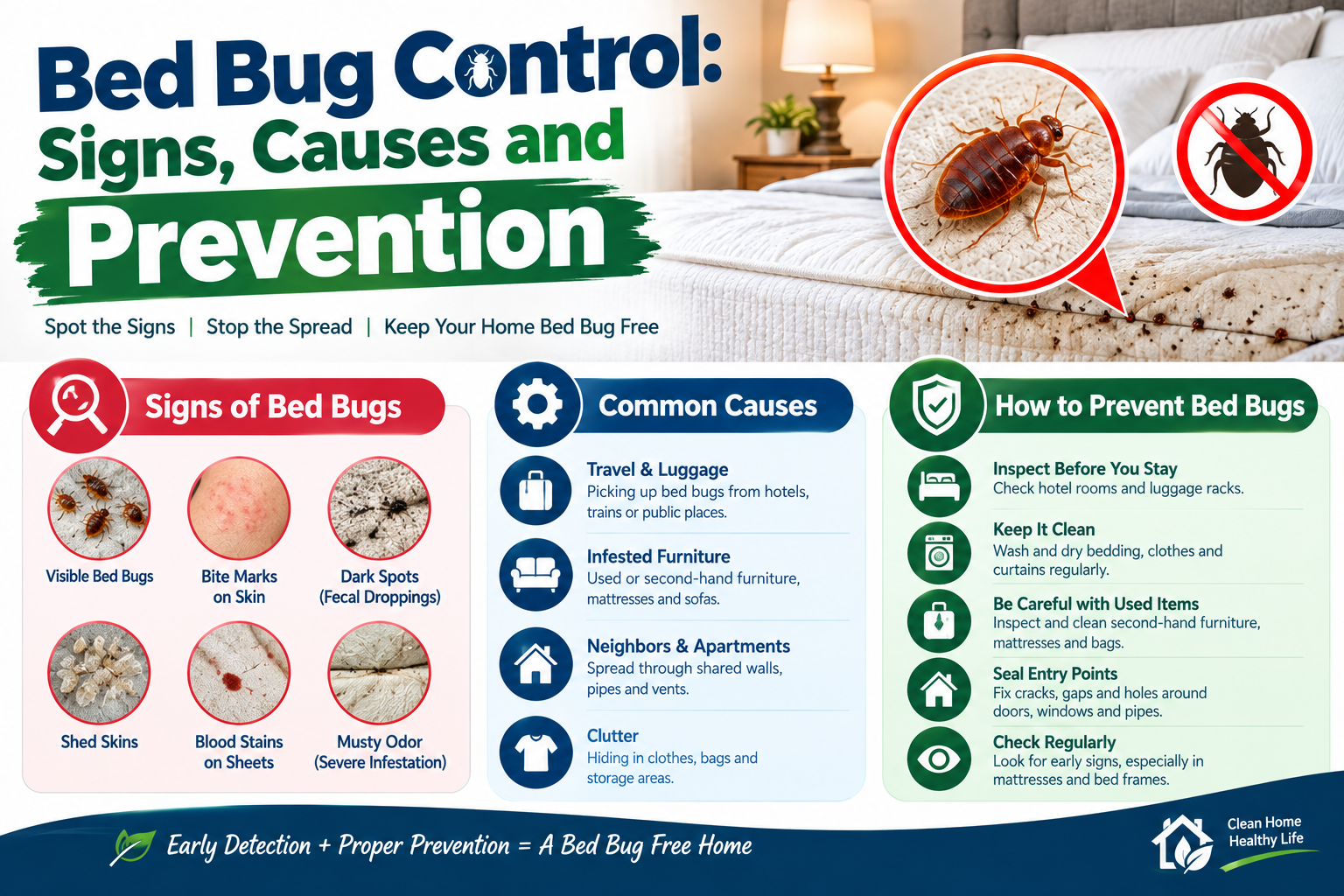

Bed Bug Control: Signs, Causes and Prevention
Bed bugs are small, reddish-brown insects that feed on blood and commonly hide in mattresses, bed frames, furniture, cracks, and other protected areas. They can be difficult to detect because they are small and tend to remain hidden during the day.
A bed bug problem can spread quickly if it is not identified and addressed early. Understanding the signs, causes, prevention methods, and treatment options can help you protect your home.
What Are Bed Bugs?
Bed bugs are small, wingless insects that feed on blood. Adult bed bugs are typically about the size of an apple seed, while younger bed bugs are much smaller.
They can hide in:
- Mattress seams
- Bed frames
- Headboards
- Sofas and chairs
- Cracks and crevices
- Behind furniture
- Around baseboards
- Luggage and bags
Bed bugs do not necessarily indicate that a home is dirty. They can be introduced into clean homes through luggage, clothing, used furniture, and other belongings.
Common Signs of Bed Bugs
Identifying an infestation early can make treatment easier.
1. Small Dark Spots
You may notice tiny dark or rusty-colored spots on mattresses, sheets, pillowcases, or nearby furniture.
2. Live Bed Bugs
Look carefully around mattress seams, bed frames, and cracks for small reddish-brown insects.
3. Shed Skins
Bed bugs shed their skins as they grow. These pale skins may sometimes be found around their hiding areas.
4. Eggs and Eggshells
Bed bug eggs are very small and can be difficult to spot. They may be found in cracks, seams, and other hidden areas.
5. Bites or Skin Reactions
Some people develop itchy marks after being bitten, while others may have little or no noticeable reaction. Skin reactions alone cannot confirm a bed bug infestation.
6. Unusual Odor
A larger infestation may sometimes produce a noticeable musty or sweet odor.
How Do Bed Bugs Enter Your Home?
Bed bugs are excellent hitchhikers. They can be transported from one place to another through personal belongings.
Common ways they may enter include:
- Travel luggage
- Hotels and temporary accommodations
- Used furniture
- Second-hand mattresses
- Clothing and bags
- Public transportation or shared spaces
- Visitors’ belongings
They do not normally enter a home because of poor hygiene.
How to Prevent Bed Bugs
While it is impossible to eliminate every risk, several habits can reduce the chances of bringing bed bugs into your home.
Inspect Second-Hand Furniture
Before bringing used beds, sofas, mattresses, or other furniture indoors, inspect seams, cracks, and hidden areas carefully.
Check Luggage After Traveling
After returning from a trip, inspect luggage and clothing. Avoid placing suitcases directly on beds when traveling.
Wash and Dry Clothing
Follow the care instructions on clothing and use appropriate washing and drying methods after travel.
Reduce Clutter
Keep areas around beds and furniture organized. Reducing clutter can make inspections easier and limit potential hiding places.
Inspect Your Mattress Regularly
Check mattress seams, bed frames, headboards, and nearby furniture for signs of bed bugs.
How Is Bed Bug Treatment Done?
Bed bug treatment depends on the size and location of the infestation.
A professional pest control service may inspect the property and identify hiding areas before recommending a treatment plan.
Treatment may involve targeted insecticide applications, heat-based methods, physical removal, monitoring, or a combination of approaches.
Because bed bugs can hide in many places and eggs may survive some treatments, follow-up inspections or treatments may sometimes be necessary.
What Should You Do If You Find Bed Bugs?
If you discover signs of bed bugs:
- Avoid moving infested furniture to other rooms.
- Inspect nearby beds and furniture.
- Wash and dry bedding according to care instructions.
- Reduce clutter around sleeping areas.
- Vacuum suitable areas carefully and dispose of the contents appropriately.
- Contact a pest control professional if the infestation persists or is extensive.
Avoid randomly spraying pesticides, particularly on mattresses or sleeping surfaces, unless the product is specifically labeled for that use.
Can Bed Bugs Be Completely Eliminated?
Bed bugs can be difficult to control because they hide in small cracks and may spread to nearby areas.
Successful control generally requires finding their hiding places, treating appropriate areas, following preparation instructions, and monitoring the property afterward.
The earlier an infestation is identified, the easier it may be to prevent it from spreading.
When Should You Call a Professional?
Consider professional bed bug control if:
- You find live bed bugs.
- You discover eggs or shed skins.
- Bed bug signs keep appearing.
- The infestation has spread to multiple rooms.
- DIY methods have not worked.
- You are unsure whether the insects are actually bed bugs.
A professional inspection can help confirm the pest and determine an appropriate treatment approach.
Conclusion
Bed bugs can enter any home, regardless of cleanliness. They are often transported through luggage, used furniture, clothing, and personal belongings.
Regular inspection, careful handling of second-hand items, and checking luggage after travel can help reduce the risk of an infestation.
If you notice live bed bugs, dark spots, shed skins, or other signs, early professional treatment can help prevent the problem from spreading further.
Stay alert, inspect regularly, and take action as soon as you notice the first signs of bed bugs.