


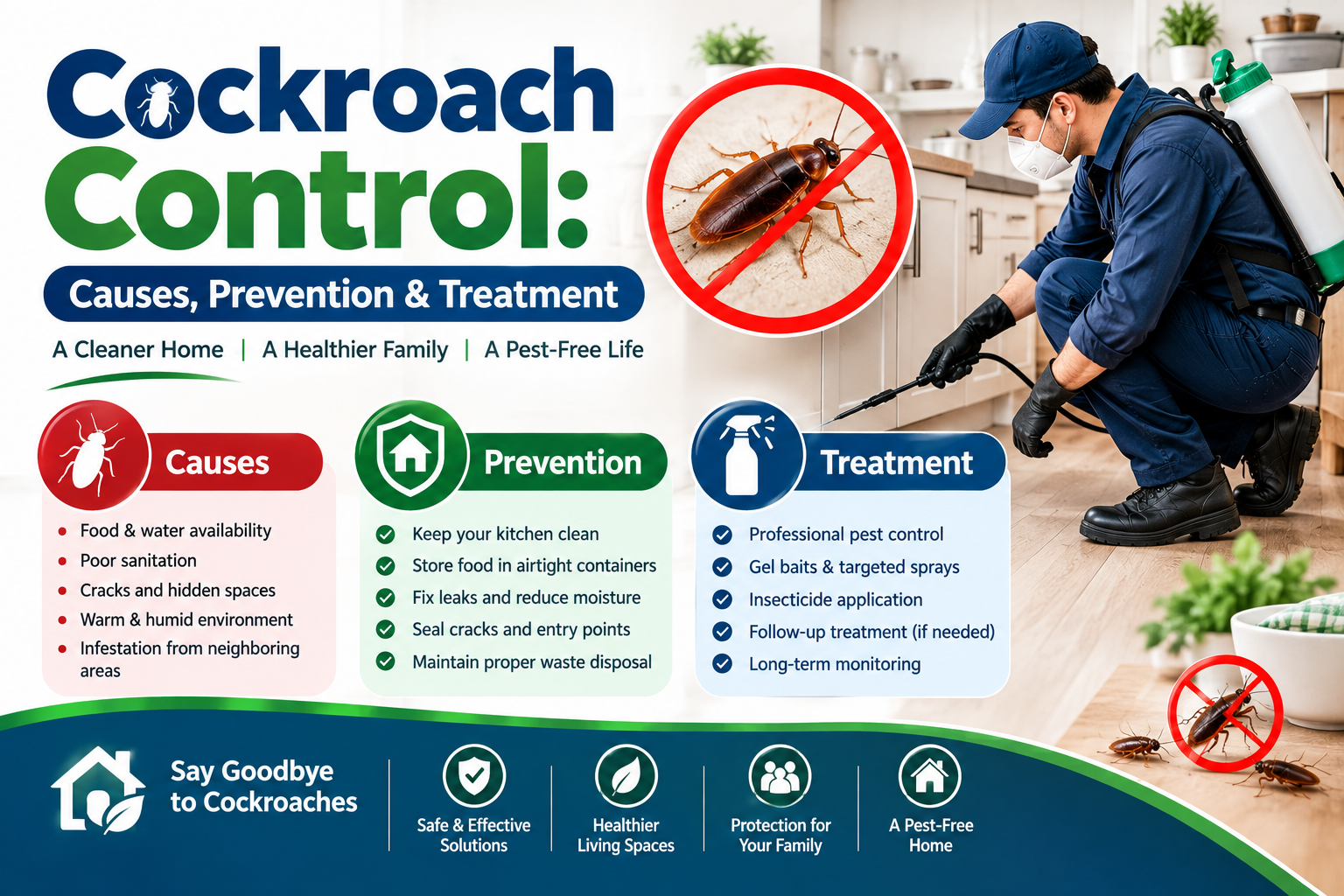

Cockroach Control: Causes, Prevention & Treatment
Cockroaches are among the most common household pests. They can enter homes through cracks, drains, pipes, doors, windows, and other small openings. Once they find food, water, and shelter, they can quickly establish themselves in kitchens, bathrooms, storage areas, and other dark spaces.
Effective cockroach control involves understanding what attracts cockroaches, how to prevent them, and when professional treatment may be necessary.
What Causes Cockroach Infestations?
Cockroaches usually look for three basic things: food, water, and shelter.
1. Food Sources
Uncovered food, crumbs, grease, food waste, pet food, and dirty dishes can attract cockroaches.
Even small amounts of food residue can provide a food source.
2. Moisture
Leaking taps, pipes, sinks, drains, and damp areas can create suitable conditions for cockroaches.
Bathrooms and kitchens are therefore common areas where cockroach activity is noticed.
3. Clutter and Hiding Places
Cockroaches prefer dark and undisturbed spaces. Cardboard boxes, cluttered cabinets, storage areas, and gaps behind appliances can provide hiding places.
4. Cracks and Entry Points
Cockroaches can enter through gaps around doors, windows, pipes, drains, walls, and other openings.
Common Signs of Cockroaches
Cockroaches are often active at night, so an infestation may exist even when you rarely see live insects.
Look for signs such as:
- Live or dead cockroaches
- Small dark droppings
- Cockroach egg cases
- Shed skins
- Unpleasant or musty odors
- Grease or smear marks
- Cockroaches appearing during the daytime
Seeing cockroaches during the day can indicate that their hiding areas are becoming crowded or that there is significant activity.
How to Prevent Cockroaches
Prevention is an important part of long-term cockroach control.
Keep Your Kitchen Clean
Clean countertops, floors, cooking surfaces, and areas underneath appliances regularly. Remove food crumbs and grease as soon as possible.
Store Food Properly
Keep food in sealed containers and avoid leaving uncovered food on kitchen counters overnight.
Manage Garbage
Use covered garbage bins and dispose of food waste regularly. Clean bins periodically to remove food residue.
Fix Water Leaks
Repair leaking taps, pipes, and plumbing fixtures. Keep sinks and damp areas as dry as practical.
Seal Cracks and Gaps
Inspect walls, cabinets, doors, windows, and plumbing openings. Seal suitable cracks and gaps that could provide entry points.
Reduce Clutter
Avoid storing unnecessary cardboard boxes, newspapers, and other materials in kitchens, bathrooms, and storage areas.
Cockroach Treatment Options
The appropriate treatment depends on the cockroach species, infestation level, and location.
Baits
Cockroach baits can be used to attract cockroaches and deliver an insecticide. They are often placed near areas where cockroach activity is observed.
Insecticide Treatments
Professional pest control technicians may use suitable insecticide treatments in targeted areas. Application should always follow the product label and professional safety instructions.
Traps and Monitoring
Sticky traps can help identify areas of cockroach activity and monitor whether pest numbers are decreasing.
Professional Pest Control
For recurring or severe infestations, professional pest control can help identify hiding places, entry points, moisture sources, and other conditions contributing to the problem.
Depending on the infestation, follow-up treatment may be recommended.
Why DIY Cockroach Control May Not Always Work
Store-bought sprays may kill visible cockroaches but may not address hidden insects, egg cases, or the source of the infestation.
Cockroaches can hide behind appliances, inside cabinets, around plumbing, and in other difficult-to-reach areas.
If cockroach activity continues after basic cleaning and prevention measures, a professional inspection can help determine the next step.
What to Do Before Professional Cockroach Treatment
Your pest control provider may give you specific preparation instructions. These can include:
- Remove exposed food and food utensils.
- Clean food crumbs and spills.
- Empty or organize areas that need treatment.
- Keep children and pets away from treatment areas as instructed.
- Follow any required instructions regarding cleaning or access.
Always follow the technician’s instructions and the pesticide product label.
How Long Does Cockroach Control Take?
The time required to control cockroaches varies depending on the size of the infestation, species, treatment method, and conditions inside the property.
You may continue to see some cockroach activity shortly after treatment. This does not necessarily mean the treatment has failed.
In some cases, follow-up treatment may be required, particularly for established infestations.
When Should You Call a Pest Control Professional?
Consider professional pest control if:
- Cockroaches keep returning.
- You regularly see cockroaches at night.
- You find egg cases or droppings.
- Cockroach activity is increasing.
- DIY methods have not solved the problem.
- Cockroaches are appearing in multiple rooms.
Early action can help prevent a small pest problem from becoming a larger infestation.
Conclusion
Effective cockroach control requires more than simply killing the insects you can see. Removing food and water sources, reducing hiding places, sealing entry points, and maintaining good sanitation can help prevent future activity.
For persistent infestations, professional pest control can provide a more comprehensive approach to identifying and treating the problem.
If you notice the first signs of cockroaches, taking action early can help protect your home and prevent the infestation from spreading.