



How Long Does Pest Control Treatment Take to Work?
When pests enter your home, one of the first questions homeowners ask is: “How long will pest control take to work?”
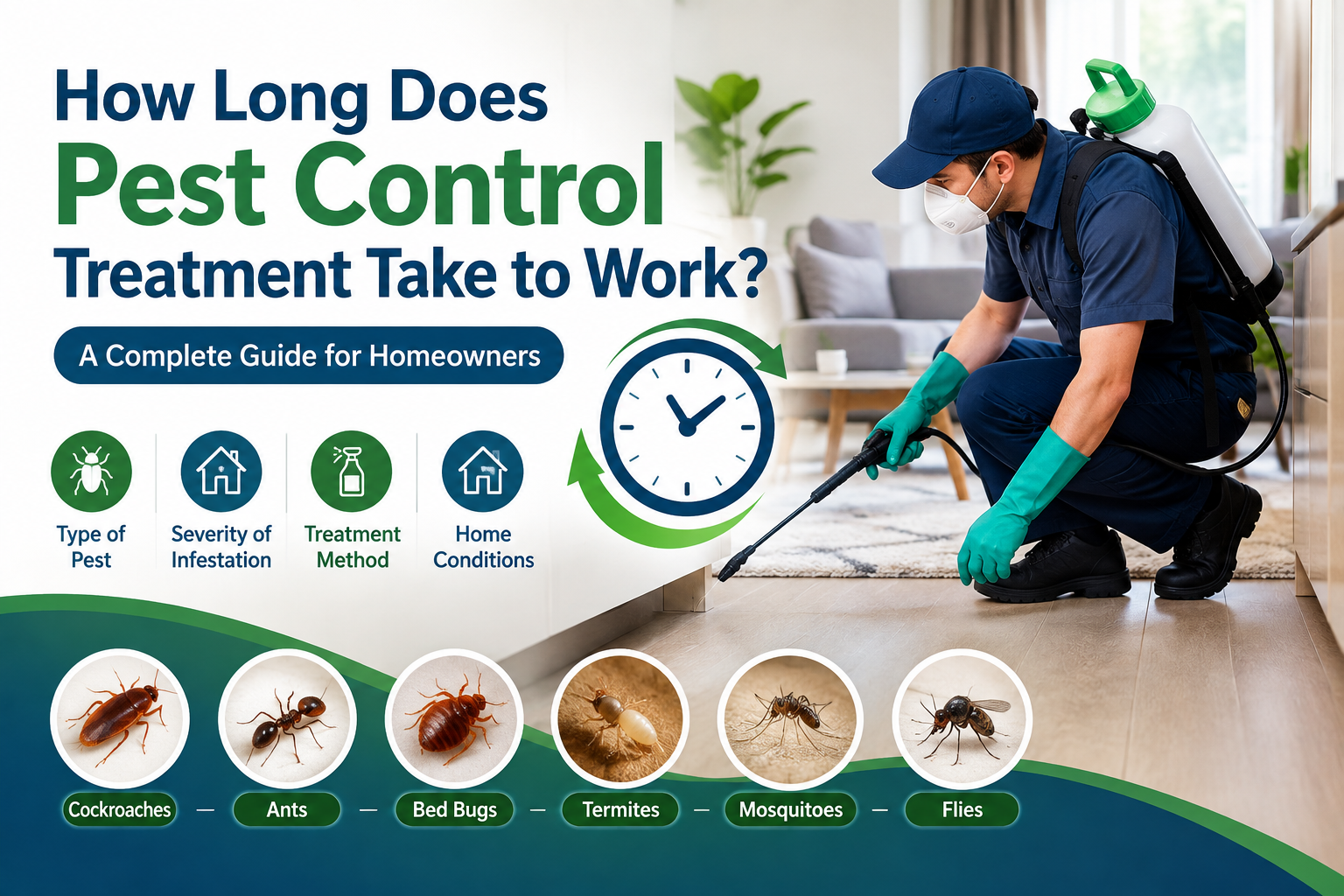
The answer depends on the type of pest, the severity of the infestation, the treatment method used, and the conditions inside the property. Some treatments can show results within a few hours, while others may take several days or even a few weeks to completely control the pest problem.
How Quickly Does Pest Control Start Working?
Most professional pest control treatments begin working soon after application. However, you may not notice an immediate reduction in pest activity.
Some pests may continue to appear for a short period because they are coming out of hiding after treatment. This does not necessarily mean that the treatment has failed.
Typical Timeframes
- Ants: Results may become noticeable within a few days.
- Cockroaches: Activity may reduce over several days, although complete control can take longer.
- Bed bugs: Multiple treatments may be required, and complete control can take several weeks.
- Mosquitoes: Adult mosquito activity can decrease quickly, but ongoing prevention may be needed.
- Termites: Depending on the treatment method and infestation, control can take weeks or longer.
- Rodents: Results depend on the number of rodents, food sources, entry points, and trapping or baiting methods used.
These timeframes are general estimates. A professional pest control technician can provide a more accurate timeline after inspecting the property.
Why Are You Still Seeing Pests After Treatment?
It is common to see some pests after treatment, particularly during the first few days.
There are several possible reasons:
1. Pests Are Leaving Their Hiding Places
Treatment can disturb pests and cause them to move out of hidden areas. You may temporarily notice increased activity before the population starts decreasing.
2. Eggs May Survive
Some pest eggs can be more resistant to certain treatments. As eggs hatch, newly emerged pests may require additional treatment or continued control measures.
3. The Infestation Is Large
A heavy infestation generally takes longer to control than a small one. Large infestations may require follow-up visits.
4. Food and Water Sources Remain Available
Food crumbs, standing water, leaking pipes, garbage, and clutter can continue to attract pests even after treatment.
How Long Does Professional Pest Control Last?
The duration of protection depends on the pest, treatment method, property conditions, and level of infestation.
Some treatments provide residual protection for a period after application, while others primarily target pests present at the time of treatment.
Regular inspections and preventive treatments may be recommended for properties that experience recurring pest problems.
What Should You Do After Pest Control?
Following the technician’s instructions is important for getting the best results.
Depending on the treatment, you may need to:
- Keep treated areas undisturbed for the recommended period.
- Clean surfaces only when instructed.
- Keep children and pets away from treated areas as advised.
- Remove exposed food and utensils before treatment.
- Fix leaking taps and pipes.
- Keep food stored in sealed containers.
- Dispose of garbage regularly.
- Seal cracks and potential pest entry points.
Avoid immediately washing or removing treated areas unless the pest control professional specifically recommends it.
When Should You Contact Pest Control Again?
If pest activity remains high after the expected treatment period, contact the pest control provider for advice.
A follow-up treatment may be necessary for certain infestations, especially when dealing with bed bugs, termites, cockroaches, or other persistent pests.
Final Thoughts
Pest control is not always an instant solution. While some treatments can begin working quickly, complete pest control may take several days or multiple treatments depending on the situation.
The most effective approach combines professional treatment, proper hygiene, moisture control, and prevention. If you continue to notice signs of an infestation, getting a professional inspection can help identify the source and determine the appropriate treatment plan.
Early treatment can help prevent a small pest problem from becoming a larger infestation.