


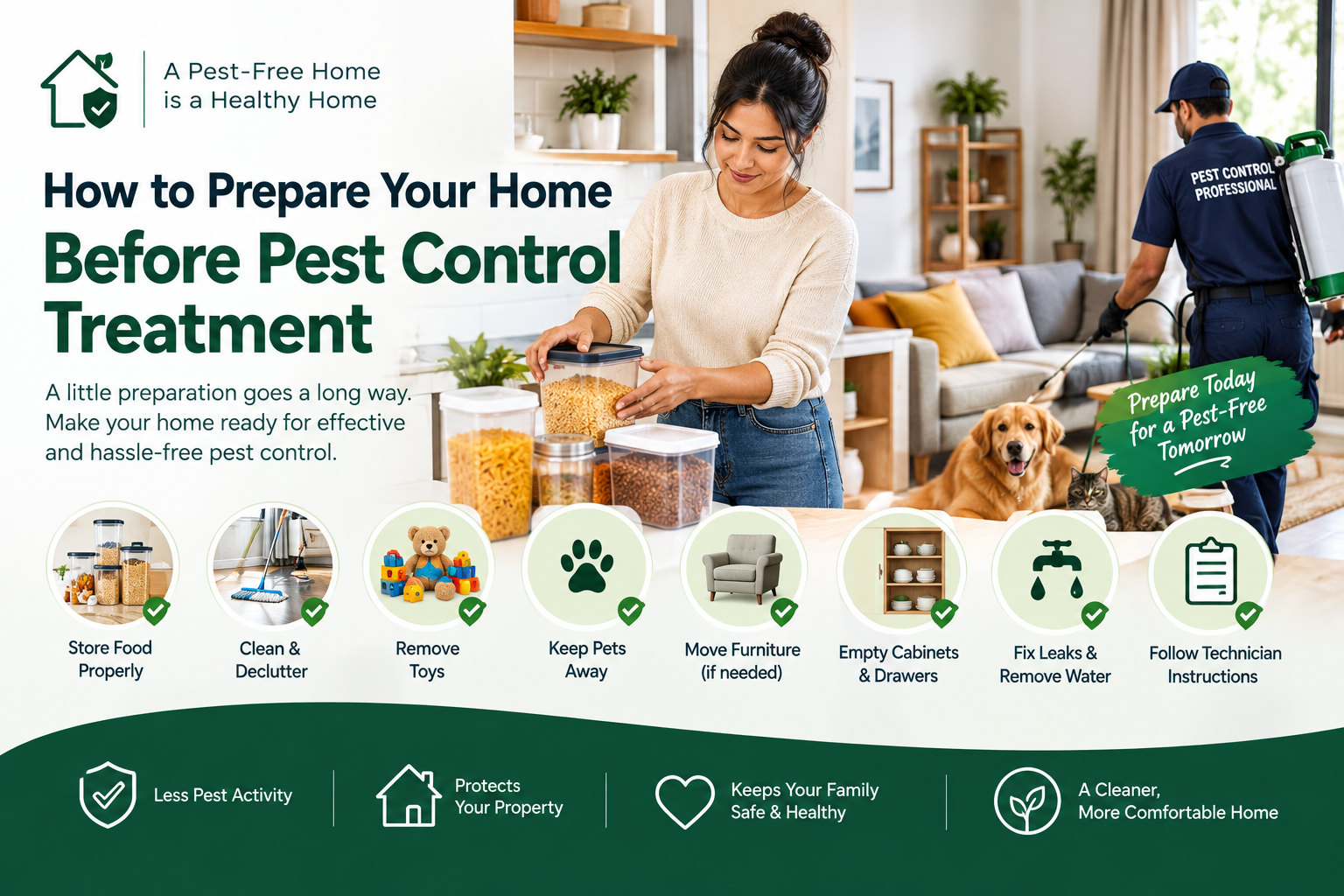

How to Prepare Your Home Before Pest Control Treatment
Professional pest control can be much more effective when your home is properly prepared before the treatment begins. A little preparation can help technicians access important areas, improve treatment coverage, and make the process smoother for everyone.
Whether you’re dealing with cockroaches, ants, termites, bed bugs, rodents, or other household pests, knowing what to do before a treatment can make a big difference.
Here is a simple guide on how to prepare your home before pest control treatment.
1. Clean the Areas Being Treated
Remove unnecessary items, dust, food particles, and clutter from areas where pest control will be performed.
Pay particular attention to:
- Kitchen counters
- Cabinets
- Floors
- Bathroom areas
- Storage spaces
- Areas behind appliances
A clean and accessible space allows the technician to inspect and treat the required areas more easily.
2. Store Food Properly
Before treatment, remove or securely cover food items.
Keep:
- Fruits and vegetables covered
- Open food packets sealed
- Cereals and grains in airtight containers
- Pet food stored securely
- Cooking ingredients away from treatment areas
Food should not be left exposed during treatment.
3. Cover Kitchen Utensils
If the kitchen is going to be treated, place plates, glasses, cutlery, cookware, and other utensils inside closed cabinets or sealed containers.
After treatment, follow the pest-control company’s instructions regarding when and how treated surfaces should be cleaned.
4. Remove Children’s Toys
Move children’s toys, stuffed animals, play equipment, and other items away from areas scheduled for treatment.
For items that cannot be moved, ask the pest-control professional whether they need to be covered or temporarily removed.
5. Keep Pets Away From Treatment Areas
Pets should generally be kept away from areas being treated.
This includes:
- Dogs
- Cats
- Birds
- Fish
- Rabbits
- Other household pets
Ask the pest-control professional for specific instructions based on the treatment being used. Fish tanks and aquariums may require special precautions.
6. Reduce Clutter
Pests often hide in dark, cluttered areas.
Before treatment, organize items stored under beds, inside cabinets, near walls, and in storage rooms.
Reducing clutter can make it easier to identify potential hiding places and entry points.
7. Move Furniture When Necessary
Some treatments require access behind or underneath furniture.
If possible, move lightweight furniture slightly away from walls or other areas scheduled for treatment.
Don’t move heavy furniture yourself if doing so could cause injury or damage. Your technician can advise you about what needs to be moved.
8. Empty Certain Cabinets and Drawers
For treatments involving kitchens, bathrooms, or storage cabinets, you may need to remove some items.
Emptying the appropriate cabinets and drawers allows professionals to inspect cracks, corners, hinges, and other potential pest-hiding areas.
Follow the instructions provided by your pest-control company because requirements can vary by treatment.
9. Repair Leaks and Remove Standing Water
Moisture can attract certain pests.
Before treatment, check for:
- Leaking taps
- Damaged pipes
- Water around sinks
- Standing water
- Damp areas
- Poorly ventilated spaces
Fixing moisture problems can support long-term pest prevention.
10. Close or Cover Sensitive Items
Certain personal belongings may need to be covered or removed depending on the treatment.
These can include:
- Clothing
- Bedding
- Electronics
- Personal-care products
- Children’s items
- Decorative objects
Your pest-control professional should tell you which items require special precautions.
11. Make Sure the Technician Can Access Key Areas
Don’t block access to important areas such as:
- Under sinks
- Behind appliances
- Along walls
- Storage areas
- Bathrooms
- Kitchens
- Garages
- Basements
- Attics
Easy access helps technicians inspect the property and apply treatment where appropriate.
12. Ask About Specific Treatment Instructions
Not every pest-control treatment requires the same preparation.
For example, preparing for bed bug treatment can be different from preparing for cockroach, termite, or mosquito control.
Before the appointment, ask the pest-control company:
- What areas need to be cleared?
- Should food be removed?
- How long should people stay away?
- When can pets return?
- When can surfaces be cleaned?
- Is a follow-up treatment required?
Following the technician’s specific instructions is important.
What to Do After Pest Control Treatment
Preparation doesn’t stop once the treatment is complete.
Depending on the treatment, you may need to:
- Wait for the recommended re-entry time
- Keep children and pets away until instructed otherwise
- Avoid washing treated areas immediately
- Clean food-preparation surfaces as instructed
- Dispose of dead pests safely
- Monitor for continued pest activity
- Follow any recommended follow-up schedule
Don’t immediately remove or wash away treated areas unless your pest-control professional tells you to do so.
Common Mistakes to Avoid Before Pest Control
Don’t Leave Food Exposed
Open food can create unnecessary contamination concerns and may attract pests.
Don’t Ignore Clutter
Piles of boxes, clothing, or unused items can provide hiding places for pests.
Don’t Skip the Technician’s Instructions
Different treatments have different safety and preparation requirements.
Don’t Assume One Treatment Fits Every Pest
Cockroaches, termites, bed bugs, rodents, and mosquitoes require different control approaches.
Final Thoughts
Preparing your home before pest control treatment doesn’t have to be complicated. Cleaning, removing clutter, protecting food, securing personal items, and providing easy access to treatment areas can help make the process smoother.
Most importantly, follow the specific instructions provided by your pest-control professional, because preparation and re-entry requirements can vary depending on the pest and treatment method.
With proper preparation and ongoing prevention, you can help keep your home more comfortable and reduce the chances of recurring pest problems.