



How Often Should You Get Pest Control Done at Home?
Pest control is an important part of keeping your home clean, comfortable, and protected. Even if you don’t currently see pests, insects and rodents can enter your home through small cracks, doors, windows, drains, and other hidden entry points.
So, how often should you get pest control done at home?
The answer depends on your location, type of property, pest problems, and the level of infestation. For many homes, regular preventive pest control every few months can help reduce the chances of recurring pest problems.
Why Regular Pest Control Is Important
Pests don’t always appear suddenly. They can slowly establish nests and breeding areas in kitchens, bathrooms, storage spaces, walls, furniture, and other hidden locations.
Regular pest control can help:
- Reduce pest activity
- Prevent recurring infestations
- Protect food and storage areas
- Reduce the risk of property damage
- Identify pest problems early
- Maintain a cleaner and more comfortable home
How Often Should You Schedule Pest Control?
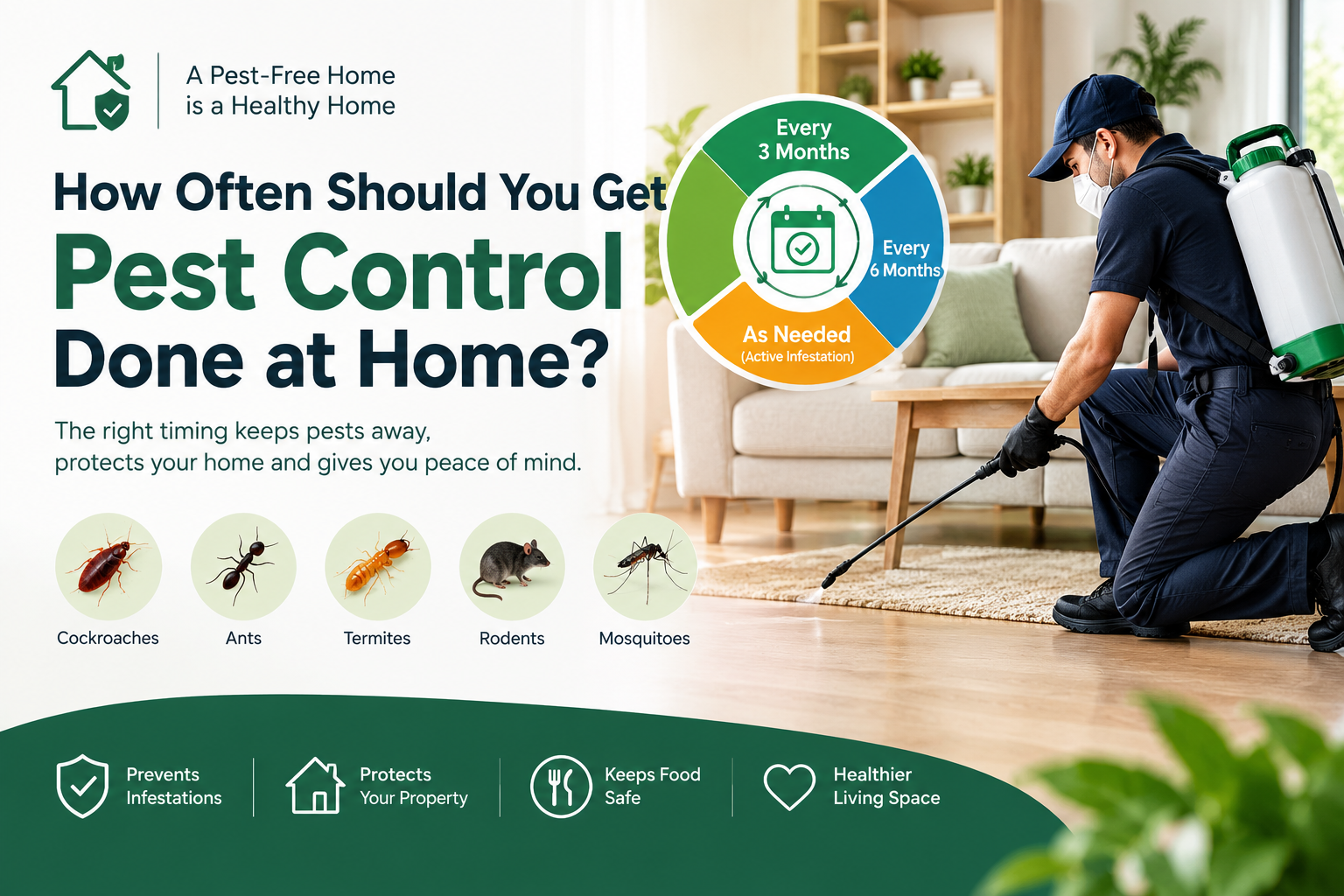
1. Every 3 Months for Preventive Protection
Quarterly pest control is commonly used by homeowners who want ongoing protection.
A three-month schedule can be useful for homes that frequently experience ants, cockroaches, spiders, mosquitoes, or other common household pests.
However, the ideal frequency can vary depending on the pest and treatment used.
2. Every 6 Months for Low-Risk Homes
If your home has relatively little pest activity, a treatment twice a year may be sufficient as part of a preventive approach.
This can be particularly useful when combined with good housekeeping, food storage, moisture control, and sealing potential entry points.
3. More Frequently During an Active Infestation
If you already have a significant pest problem, waiting several months between treatments may not be appropriate.
Certain infestations require an initial treatment followed by inspections or follow-up treatments. Bed bugs, termites, and some other persistent pests may require a specialized treatment plan rather than a simple routine spray.
A professional can determine the appropriate schedule based on the pest and severity of the infestation.
Factors That Affect Pest Control Frequency
There isn’t one schedule that works for every property. Several factors can influence how often treatment may be needed.
Type of Pest
Different pests behave differently.
Cockroaches, ants, termites, bed bugs, rodents, and mosquitoes may require different treatment methods and follow-up schedules.
Location of Your Home
Homes in warm, humid, or heavily vegetated areas may experience more pest activity than properties in other environments.
Property Type
Apartments, independent houses, offices, rental properties, and commercial buildings can have different pest-control requirements.
Shared walls, common areas, garbage facilities, and neighboring units can also influence pest activity.
Cleanliness and Food Storage
Food crumbs, uncovered food, overflowing garbage, and dirty dishes can attract insects and rodents.
Keeping your home clean and storing food properly can support your pest-control efforts.
Moisture Problems
Leaking pipes, standing water, damp bathrooms, and moisture around the property can create favorable conditions for certain pests.
Fixing water leaks and improving ventilation can help reduce these conditions.
Signs You May Need Pest Control Sooner
You may need an inspection or treatment sooner than your regular schedule if you notice:
- Live cockroaches or ants
- Rodent droppings
- Gnaw marks
- Insect eggs or nests
- Bed bugs or blood spots on bedding
- Termite mud tubes
- Damaged wood
- Unusual pest-related odors
- Increased pest activity at night
- Pests repeatedly returning after treatment
Don’t wait for a minor pest issue to become a major infestation.
Should You Do Pest Control Even If You Don’t See Pests?
Yes, preventive pest control can be useful in some homes.
The absence of visible pests doesn’t necessarily mean there are no pests. Some insects and rodents spend most of their time in hidden areas such as wall cavities, cabinets, crawl spaces, attics, basements, and behind appliances.
A professional inspection can help identify potential risks before they become obvious.
How to Make Pest Control More Effective
Professional treatment works best when combined with good prevention habits.
Keep Food Sealed
Store cereals, grains, snacks, pet food, and other food items in sealed containers.
Keep the Kitchen Clean
Clean food spills and crumbs quickly, especially around appliances and under cabinets.
Remove Garbage Regularly
Use covered garbage bins and avoid allowing waste to accumulate indoors.
Fix Leaks
Repair leaking faucets, pipes, and drains to reduce moisture that can attract certain pests.
Seal Entry Points
Check doors, windows, pipes, vents, and walls for cracks and gaps that pests can use to enter.
Keep Storage Areas Organized
Avoid excessive clutter, especially in garages, basements, storage rooms, and other areas where pests can hide.
Professional Pest Control vs. DIY Treatment
DIY sprays and traps can sometimes help with small pest problems. However, they may not address the source of an infestation.
Professional pest control can include:
- Pest identification
- Property inspection
- Identification of entry points
- Targeted treatment
- Preventive recommendations
- Follow-up inspections when required
The right approach depends on the pest, property, and treatment method.
Final Thoughts
There is no universal pest-control schedule for every home. Quarterly, twice-yearly, or treatment-specific schedules may be appropriate depending on your property’s needs.
If you frequently see pests or notice signs of an infestation, consider arranging a professional inspection rather than waiting for the problem to grow.
A combination of professional pest control and regular prevention habits can help keep your home more comfortable and reduce the chances of recurring pest problems.